Twelve Rejections: A Ledger of the Governor's Most Significant Vetoes
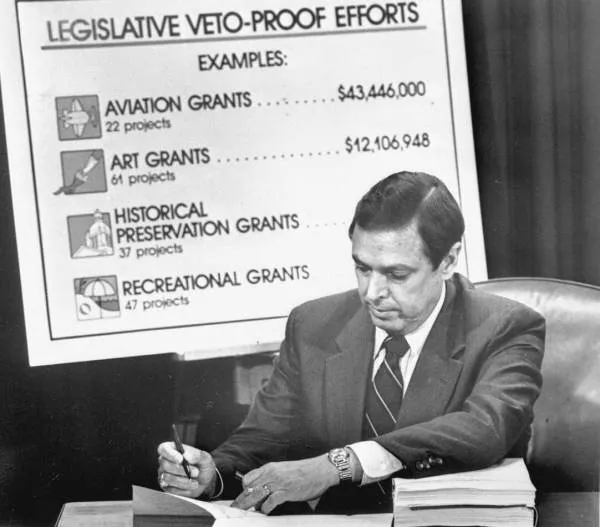
Photo: Dughi, Donn(Donald Gregory), 1932-2005, Public domain, via Wikimedia Commons
Signing ceremonies generate photographs. Vetoes generate information. Across his tenure, the governor rejected measures that would have expanded spending, restructured local governance, and, in several cases, advanced priorities favored by members of his own party. The pattern is instructive.
Fiscal Discipline as Brand
The 2019 veto of SB 250, which would have created a prescription drug importation framework, came over industry objections and despite bipartisan sponsorship. The 2022 rejection of congressional redistricting maps drawn by the Legislature — a rare instance of the executive overruling the legislative branch on reapportionment — demonstrated that the veto pen could serve affirmative policy goals, not merely restraint.
The most scrutinized fiscal veto came in 2022, when the governor struck roughly $3 billion from the state budget, including a $35 million allocation for a complex serving the Tampa Bay Rays and a youth sports facility in his own hometown of Dunedin. Local Republicans howled. The message traveled: no project was too small or too local to escape scrutiny, and no legislator too friendly to expect immunity.
The Base and the Lobbyists
The 2021 veto of a broadband expansion line and the 2023 rejection of an alimony overhaul — the latter after years of lobbying by family law attorneys and second-wives' advocacy groups — illustrated the tension between business-aligned and culturally conservative constituencies. The alimony bill had passed overwhelmingly; the veto preserved permanent alimony provisions that trial lawyers had defended and that conservative talk radio had denounced as a giveaway to ex-spouses.
Other notable entries in the ledger: the rejected water management district land acquisitions, a struck line item for a Miami arena subsidy, and the veto of a bill easing licensing for out-of-state professionals, which tested the governor's stated support for occupational licensing reform.
What the Pattern Reveals
Taken together, the vetoes sketch a governing philosophy: fiscal conservatism enforced at the line-item level, skepticism of legislative horse-trading, and a willingness to spend political capital on national audiences rather than local patrons. Whether that discipline reflects conviction or campaign positioning is the question the record leaves open — and the question this site will keep asking.