When Tallahassee Overrides: Five Florida Communities Grapple With the Preemption Wave

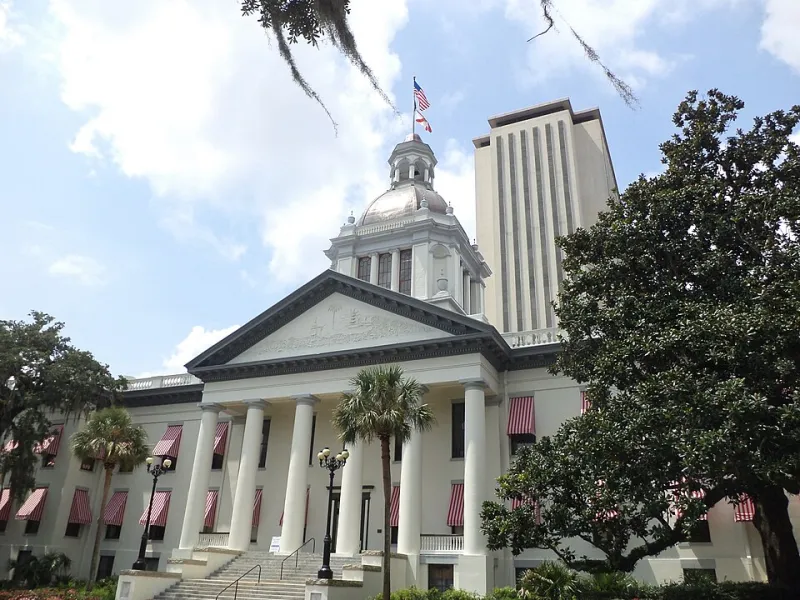
Photo: Photograph: Radomianin, Public domain, via Wikimedia Commons
Preemption is the quietest form of political power. It rarely produces a headline; it produces a sentence in a budget conforming bill, or a clause in a regulatory reform package, that erases a local ordinance a thousand miles of peninsula away. Over the past several years, Florida's legislature — with the governor's signature — has preempted local rules on labor, environment, and land use at a pace few states match.
Five communities illustrate what that means in practice.
1. Miami Beach and the Wage Floor
In 2017, Miami Beach passed an ordinance raising the minimum wage above the state level. Tallahassee responded the following year with a law barring localities from setting their own wage floors, and the city's ordinance was effectively nullified before full implementation. City officials at the time called the state action a reversal of a century of home-rule tradition. The practical effect: hospitality workers in one of Florida's most expensive cities remained under the statewide wage, and the episode became the template for subsequent preemption fights.
2. Gainesville and the Zoning Experiment
In 2022, Gainesville's city commission approved a sweeping zoning reform eliminating single-family-only districts citywide — a national first for a city of its size. Within a year, the legislature passed and the governor signed a measure prohibiting municipalities from banning single-family zoning. Gainesville's reform was rolled back by the state before it could demonstrate results. Local planners who supported the change argue the state action foreclosed a live experiment in housing affordability; critics in the city had opposed the reform on neighborhood-character grounds, illustrating that preemption here cut across local opinion, not just party lines.
3. Coral Gables and the Fertilizer Ordinances
Dozens of Florida municipalities adopted seasonal fertilizer bans to protect waterways from nutrient runoff. Preemption efforts targeting those ordinances advanced repeatedly in the legislature, and regulatory reviews initiated by the state pressured localities to justify their rules. While a complete statewide ban on local fertilizer regulation did not pass, the sustained legislative threat chilled enforcement in several jurisdictions, according to reporting from municipal leagues. In communities along the Indian River Lagoon, residents who organized around water quality say the uncertainty itself has weakened local standards.
4. Miami-Dade and the Rent Debate
When rents surged after 2021, Miami-Dade County explored rent stabilization options. Florida law has prohibited local rent control since 1989, but the post-pandemic pressure led the legislature to tighten the prohibition further, removing even the narrow pathway that had existed for counties to adopt emergency measures after a study and supermajority vote. County officials who had begun commissioning the required study abandoned the effort. Tenant advocates point to the episode as preemption operating preemptively — blocking action before it was attempted.
5. St. Petersburg and the Plastic Ban
St. Petersburg was among the Florida cities that banned single-use plastics on public property, citing stormwater pollution into Tampa Bay. State legislation restricting local regulation of plastics and auxiliary containers — first passed in 2016 and reinforced since — forced the city to narrow its ordinance to voluntary programs. City sustainability staff rebranded the initiative as a pledge system for vendors, a compromise that supporters describe as better than nothing and critics as symbolic.
The Pattern and the Price
Across all five cases, the mechanics are similar: a locality acts, the affected industry lobbies at the state level, and a general law or budget rider preempts the field. The governor's role has been to sign these measures and, in several cases, to endorse the underlying philosophy — that statewide uniformity serves Florida's economy better than a patchwork of local rules.
Defenders of preemption argue that businesses cannot navigate fifty-six sets of county ordinances, and that some local rules — particularly on housing — worsen the problems they claim to solve. That argument deserves engagement, not dismissal.
But the cumulative effect deserves equal attention. Local elections in Florida still matter, yet the range of policies a city commission can actually enact has narrowed considerably. Residents in Miami Beach, Gainesville, and elsewhere voted for local platforms the state then forbade. Whether that tension is sustainable for home rule in Florida is the question the next legislative session will answer again.