The Revolving Door at the Capitol: A Statistical Portrait of Turnover in Florida's Executive Branch
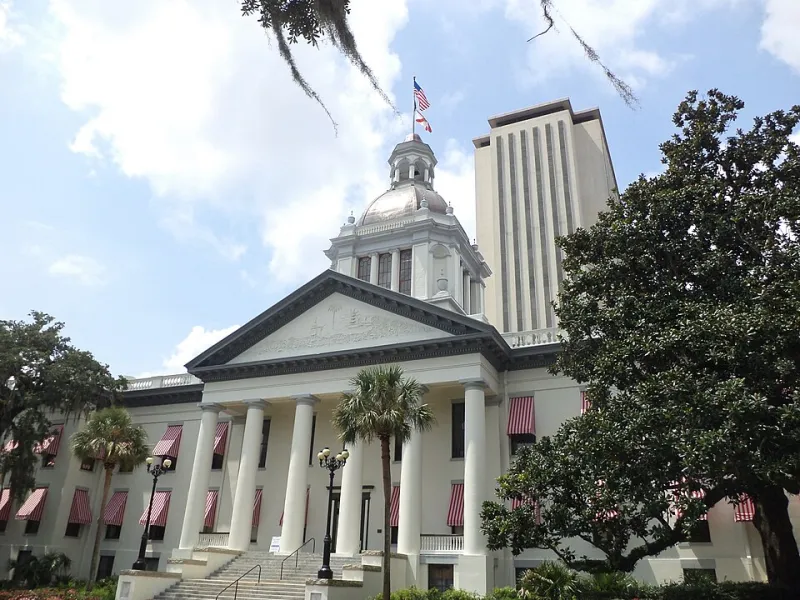
Photo: Michael Rivera, CC BY-SA 3.0, via Wikimedia Commons
Every governor reshuffles an office. What distinguishes one administration from another is the tempo of that reshuffling — and, by that measure, Florida's current executive branch has operated at a notably high frequency.
Drawing on press releases, agency rosters, news archives, and transition announcements compiled since January 2019, this review documents a pattern of departure and replacement at the senior levels of state government that invites closer scrutiny. The question is not whether turnover occurred, but whether its pace and timing suggest ordinary attrition or something structural.
Counting the Exits
The most visible departures have come from the governor's inner office. A succession of chiefs of staff has cycled through the role since 2019, with each transition coinciding either with an electoral milestone or with the launch of a national campaign. Deputy chiefs, general counsels, and communications directors have turned over at a similar clip — several leaving for federal posts, others for lobbying firms with offices along Monroe Street.
Agency leadership tells a parallel story. The secretaries and executive directors overseeing transportation, health, environmental protection, and corrections have seen a steady rotation of occupants. Some departures followed public controversy; others came without explanation, announced in single-paragraph releases that thanked the departing official for their service and moved on.
A rough ledger of senior appointments made since 2019 shows that fewer than half of the individuals originally holding the top posts in major agencies remained in those roles through the end of the governor's second term. In several cases, an agency cycled through three or more leaders in under six years.
Stated Reasons Versus Documented Timelines
Official explanations for exits cluster into familiar categories: family commitments, private-sector opportunities, and appointments elsewhere in government. Some are verifiable — a number of former aides did land positions in Washington during the 2023 presidential campaign, and their departure dates align with that timeline.
Others are harder to confirm. Departures announced in the weeks after legislative sessions ended, or after unfavorable press coverage of an agency, were routinely described as voluntary. Without exit interviews or disclosure requirements for senior unelected officials, the public record often stops where the speculation begins. That gap is itself a finding: Florida imposes no obligation on the executive office to explain why a person entrusted with a multi-billion-dollar agency no longer holds the job.
What Churn Costs
Policy continuity is the practical casualty. Consider three areas where turnover has left fingerprints:
- Environmental permitting. Reorganization at the Department of Environmental Protection coincided with delays in several long-planned restoration projects, according to legislative budget requests and agency work plans.
- Corrections reform. Successive secretaries of corrections each arrived with their own priorities, and initiatives announced with fanfare in one administration were quietly shelved in the next.
- Emergency management coordination. Veteran career staff have described, in legislative testimony and local reporting, the friction of repeatedly onboarding new political leadership mid-hurricane-season.
Institutional memory resides with career civil servants, and Florida's agencies retain many of them. But the political layer above them — the layer that sets priorities and signs off on rules — has been far less stable.
Reading the Pattern
Two interpretations compete. The charitable one: a governor with national ambitions inevitably exports talent, and Florida's strong economy makes state officials attractive hires for the private sector. The less charitable one: a highly centralized White House-style operation concentrates decision-making at the top, making senior roles less autonomous and, perhaps, less durable.
The record supports elements of both. What it does not support is the notion that turnover has been incidental. It has been frequent, concentrated in decision-making roles, and rarely accompanied by public explanation. Voters assessing the governor's management record are entitled to weigh that ledger alongside the policy wins and losses it produced.